
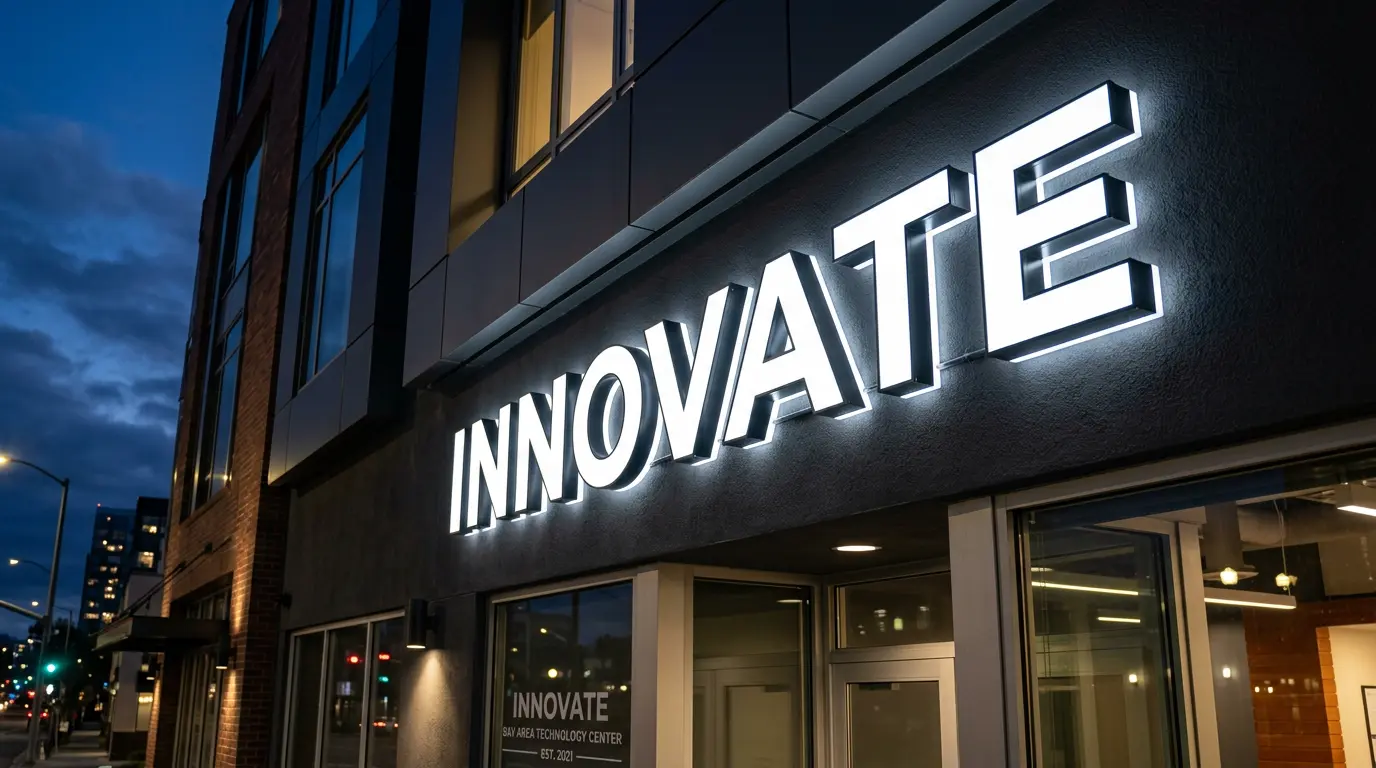
Two of the most common illuminated exterior signs for retail and commercial storefronts are channel letter signs and cabinet signs. Both are professionally fabricated, both require a permit in San Jose, and both are effective. But they’re built differently, look different, and suit different businesses. Here’s how to decide.
What Is a Channel Letter Sign?
A channel letter sign is built from individual three-dimensional letters, each fabricated separately from aluminum and acrylic. Letters are mounted directly to the building face or to a raceway and lit from within using LED modules. The result is letters that appear to float on the building — no box, no frame, just the characters themselves.
Channel letters are the standard for shopping center storefronts, restaurants, and businesses that want a clean, architectural look. They’re available in three lighting styles: front-lit (the face glows), halo-lit (light glows behind the letter against the wall), and front/back-lit (both). Halo-lit channel letters have become the preferred option for premium brands and upscale restaurants in Silicon Valley.
What Is a Cabinet Sign?
A cabinet sign — also called a box sign or lightbox — is an enclosed aluminum frame with an illuminated face, typically made from acrylic or polycarbonate. The entire face glows when lit. Cabinets are single-faced or double-faced, and are commonly mounted to building fascia, poles, or monument bases.
Cabinet signs are faster to produce, more affordable per square foot of coverage, and easier to update — if your branding changes, you replace the face panel rather than the entire sign. They’re the standard for multi-tenant retail centers where landlords want consistency across tenants.
Key Differences
Appearance: Channel letters look premium and contemporary. Cabinets read as more utilitarian. If you’re in a high-visibility retail corridor or a competitive restaurant market in San Jose, channel letters tend to communicate quality more effectively.
Cost: Cabinet signs are generally less expensive to fabricate. Channel letters cost more due to the individual letter construction, but the gap has narrowed as LED technology has improved. A typical small business storefront channel letter set runs $3,000–$8,000 installed in the Bay Area; cabinets for the same sign area typically run $2,000–$5,000.
Permit requirements: Both require a sign permit from the City of San Jose. Illuminated signs also require an electrical permit. The permit timeline and submittal requirements are the same for both types.
Landlord requirements: Many shopping centers in San Jose have sign criteria that specify one type or the other. If you’re a shopping center tenant, review your sign criteria before choosing — your landlord may require channel letters or restrict cabinet signs on certain facades.
Durability: Both types, properly fabricated and installed, last 10–15 years with standard maintenance. LED modules in both types carry similar lifespans (50,000+ hours). Cabinets are slightly more susceptible to face cracking in high-UV environments if lower-grade acrylic is used.
Which Should You Choose?
Choose channel letters if you’re in a competitive retail or restaurant corridor, your landlord permits them, and you want the cleanest possible exterior look.
Choose cabinet signs if you need faster turnaround, your budget is tighter, you’re in a multi-tenant center with cabinet requirements, or you anticipate future rebranding.
Either way, get the sign criteria from your landlord before you design anything. That document will narrow the choice for you.
Clear Line Signs designs, permits, fabricates, and installs both channel letter signs and cabinet signs for businesses across San Jose and Silicon Valley. Request a free quote →