
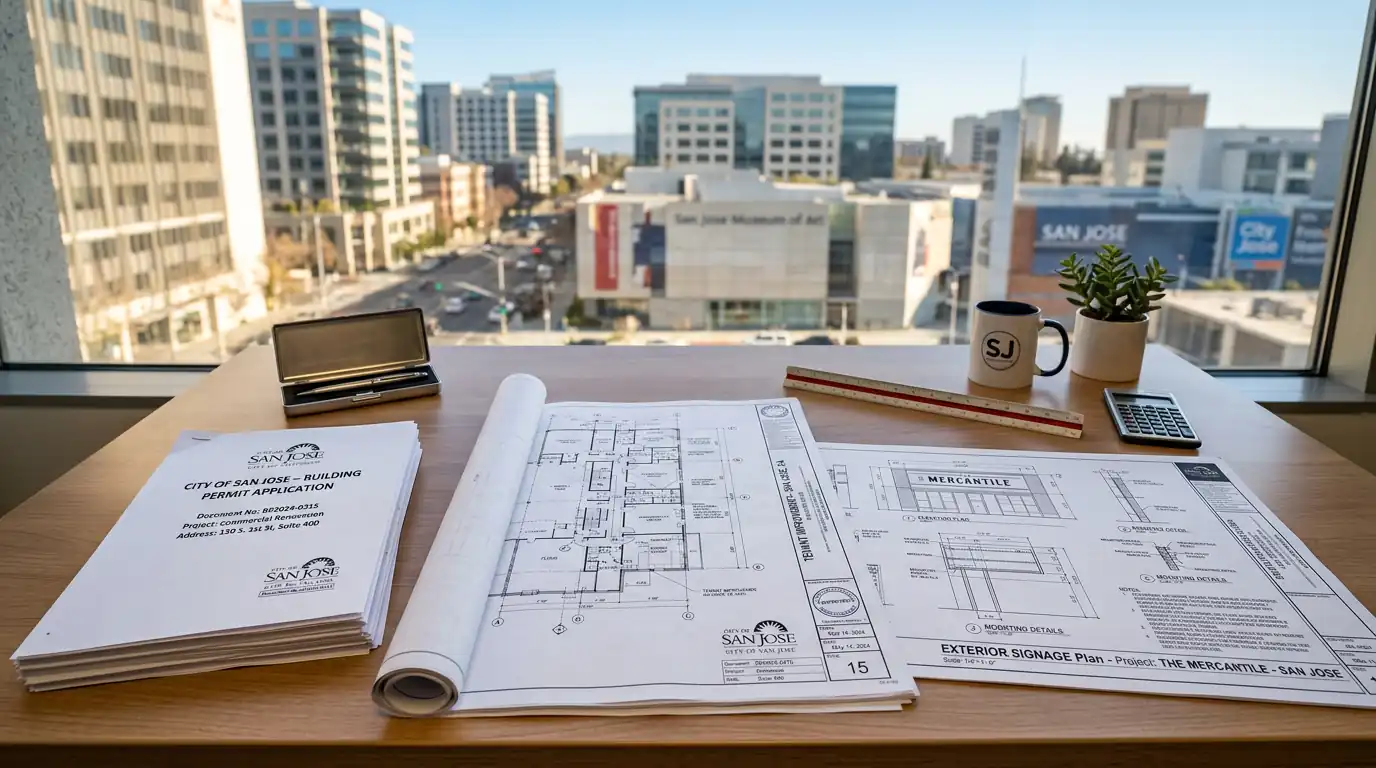
One of the first questions San Jose business owners ask when ordering a new sign is whether they need a permit. The answer depends on the sign type, its location, and whether it involves electrical work or structural mounting. Here’s a clear breakdown by sign type so you know what to expect before you start.
Signs That Almost Always Require a Permit
Channel letter signs and cabinet signs Any illuminated exterior sign mounted to a building facade requires a City of San Jose sign permit. This includes individual channel letters, illuminated cabinet signs, and LED-lit panel signs. The permit application requires engineered drawings, electrical specifications, and in most cases a landlord or property manager approval letter. Review time runs 3–6 weeks depending on current workload at the Development Services Department.
Monument signs Freestanding ground signs require both a sign permit and often a building permit, since the foundation and structural footing need to meet code. If the sign is illuminated, electrical permit work is also required. Plan for 4–8 weeks for permitted monument sign projects.
Pylon and pole signs Same requirements as monument signs, with additional structural engineering requirements for taller installations. These are among the most permit-intensive sign types.
New or replacement storefront signs Any new sign installed on a building exterior — even a non-illuminated dimensional letter sign — typically requires a permit in San Jose if it’s permanently attached to the structure. Replacement signs that match the exact dimensions and location of an existing permitted sign may qualify for a simplified re-sign permit, but this needs to be confirmed before ordering.
Signs That May or May Not Require a Permit
Window graphics Window signs are defined in San José’s sign code (§ 23.02.600) as signs applied to a window or within 12 inches of it and visible from the public right-of-way. They’re exempt from the sign permit (§ 23.02.1310), but aggregate window signage can’t exceed 25% of the window frame area and can’t be animated (§ 23.02.1060). Full-window graphics are a different matter, and we check coverage before production.
A-frame signs A-frame and sandwich board signs are “portable signs” under San José’s sign code (§ 23.02.390). On public sidewalks, the city allows temporary A-frames only in the downtown sign zone and in the Willow Glen and Alameda neighborhood business districts. Conforming signs need no advance review, but they must meet the conditions: one per business frontage, up to 8 square feet per side, 3 to 4 feet tall, displayed during business hours only, unlit, and set back from the curb and obstacles (§ 23.04.830). Elsewhere there’s no general permission, so check with the City before you put one out. Skipping this step risks a citation.
Vinyl banners San José treats a banner as a sign on cloth or other flexible material that hangs from a building, pole or wire (§ 23.02.080). Temporary signs are exempt from the sign permit (§ 23.02.1310), but ordinary promotional signs are limited to one sign up to 20 square feet per business frontage, displayed up to 30 consecutive days and no more than three times a calendar year, with the dates marked on the sign (§ 23.04.610). A banner meant to stay up long term follows the normal approval process. Advertising feather flags count as banners, not governmental flags (§ 23.02.200). We check your banner against these limits before production.
Real estate and construction signs Temporary project signage on construction sites has its own rules in the sign code. Construction banners and post-and-panel project signs may need approval tied to the project timeline, so we confirm requirements before production.
Signs That Generally Don’t Require a Permit
Interior signs Lobby signs, wayfinding signs, ADA room ID signs, wall graphics, and dimensional lettering installed inside your suite generally fall outside the sign code, which applies to signs visible from off-site or from outdoor areas open to the public (§ 23.02.810). They may require landlord approval depending on your lease terms.
Decals and small-format graphics Vehicle decals, door lettering, small informational signs (hours of operation, suite numbers), and ADA tactile signs don’t require permits. ADA signs do need to meet California Title 24 accessibility standards for placement, character size, and Braille — but compliance is a fabrication standard, not a permit process.
What Happens If You Skip the Permit
Code enforcement in San Jose does actively enforce sign regulations, particularly in commercial corridors and Business Improvement Districts. Unpermitted signs can result in a Notice of Violation, mandatory removal, and fines. More practically, an unpermitted sign becomes a problem at lease renewal or when the building sells — title companies and property managers increasingly check for open permits.
The permit process adds time, but it’s not optional for most exterior signs.
How We Handle It
Clear Line Signs manages the full permit process for San Jose sign projects — application preparation, engineered drawings where required, landlord package coordination, and city submittal. We track review status and follow up with the Development Services Department so you don’t have to. When a project comes in, we flag permit requirements in the initial quote so there are no surprises on timeline or cost.
For storefront-specific permit details, see our post on storefront sign permits in San Jose. For exterior sign types, visit our outdoor signs page. Request a free quote →
Sources
- Sign Code — Municipal Code Title 23 — City of San José Planning Division
- Sign Permit Application — City of San José Planning Division
Last reviewed: September 18, 2026