San Jose tech offices have a higher concentration of well-executed lobby signs than almost any other commercial market. Walk through the office parks in North San Jose, the Santana Row corridor, or the downtown tech corridor and you’ll see everything from polished metal dimensional letters to backlit brand panels to floor-to-ceiling culture walls. Here’s what actually works — and what doesn’t.
The Standard: Dimensional Acrylic Letters
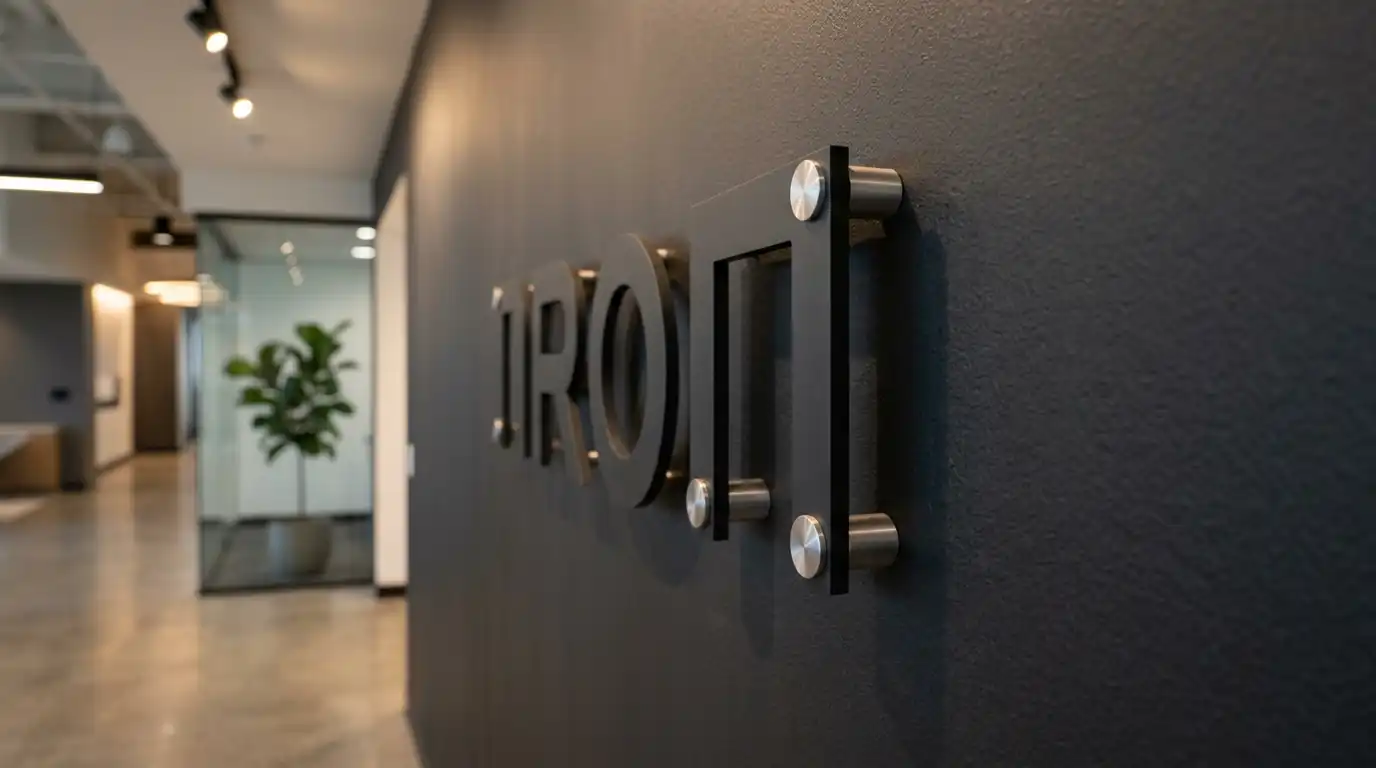
The most common lobby sign in Silicon Valley tech offices is dimensional acrylic lettering — individual letters cut from colored or painted acrylic, mounted on standoffs that hold them away from the wall to create shadow depth. The look is clean and modern, the lead time is fast (typically 1–2 weeks), and the cost is accessible for companies at most growth stages.
Done well, acrylic dimensional letters look sharp at any scale. The key is sizing — most first-time buyers underestimate how large the sign needs to be for the wall. A 12-foot reception wall behind a desk typically calls for lettering in the 6–8 foot width range. Anything smaller gets lost in the space.
Best for: Seed through Series B companies, co-working buildouts, satellite offices, and any San Jose tech office where a professional look at a controlled budget is the priority.
The Upgrade: Brushed Metal Dimensional Letters
For companies at a growth stage where the physical space needs to project more weight, brushed aluminum or stainless steel dimensional letters are the natural step up from acrylic. The material itself reads differently — heavier, more permanent, more considered. Clients and investors notice it without being able to articulate exactly why.
Brushed stainless steel is the most specified metal for contemporary Silicon Valley offices. It pairs well with modern architectural finishes — concrete, glass, white walls — without competing with them. Brushed aluminum is slightly warmer and lighter in weight, and costs somewhat less.
Best for: Series C and later-stage companies, corporate headquarters, established software firms, and any San Jose office environment where the sign needs to outlast a decade and signal institutional quality.
The Statement: Backlit and Halo-Lit Signs
Illuminated lobby signs — where the letters are lit from behind, creating a glow effect against the wall — are less common than dimensional acrylic but highly effective in the right environment. Halo-lit letters (light comes from behind the letter, not through it) create a dramatic floating effect that works especially well in darker reception areas or lobbies with controlled lighting.
The tradeoff is cost and complexity. Backlit signs require electrical rough-in work, which means coordinating with your building’s electrical and getting permits in most cases. They also require more planning time — the electrical has to be in the wall before the sign goes up. For a new office buildout where walls are still open, this is easy to plan. For a retrofit in an existing space, it requires more coordination.
Best for: Large corporate lobbies, companies with a design-forward identity, and spaces where the reception area is a destination rather than a passthrough.
The Full-Wall Approach: Culture and Brand Walls
Many San Jose tech offices use the lobby and adjacent corridor walls for more than just identification. Culture walls — mission statements, core values, company history, team photography — displayed at mural scale alongside or in place of a traditional dimensional sign create an immersive brand environment.
This approach works best when the content is genuinely meaningful to employees and visitors, not just a list of buzzwords in a large font. The strongest culture walls we’ve installed combine a dimensional logo sign with a large-format vinyl wall graphic that extends the brand into the space beyond the reception desk.
What to pair:
- Dimensional acrylic company name + full-wall brand mural
- Metal letters + values graphic on adjacent wall
- Acrylic logo panel + floor-to-ceiling city or nature photography
What Doesn’t Work
Signs that are too small for the wall. This is the most common mistake. When in doubt, go larger.
Cheap materials in premium spaces. A foam PVC sign in a Class A office building looks exactly like what it is. The material matters.
Too much text. Your company name and logo, cleanly executed and properly scaled, is almost always the right answer. Taglines, URLs, and additional copy on a reception sign make it look busy and dilute the impact.
No plan for rebranding. Startups rename, rebrand, and pivot. If you’re in a high-growth phase, think about how easy it will be to replace the sign when the time comes. Acrylic is easier and cheaper to replace than cast metal.
Timeline and Cost Reference
- Dimensional acrylic letters (4–8 ft): $700–$1,800 installed, 1–2 weeks
- Brushed metal letters (4–8 ft): $1,500–$4,000 installed, 3–4 weeks
- Backlit sign: $3,000–$8,000+ installed, 4–6 weeks with electrical
- Wall graphic addition: $400–$1,200 installed, 1 week
Clear Line Signs has installed lobby signs for tech companies across San Jose and Silicon Valley including JFrog, H2O.ai, Netskope, Mirantis, and Fujitsu. Request a free quote → or visit our lobby signs page for more on materials and options.