
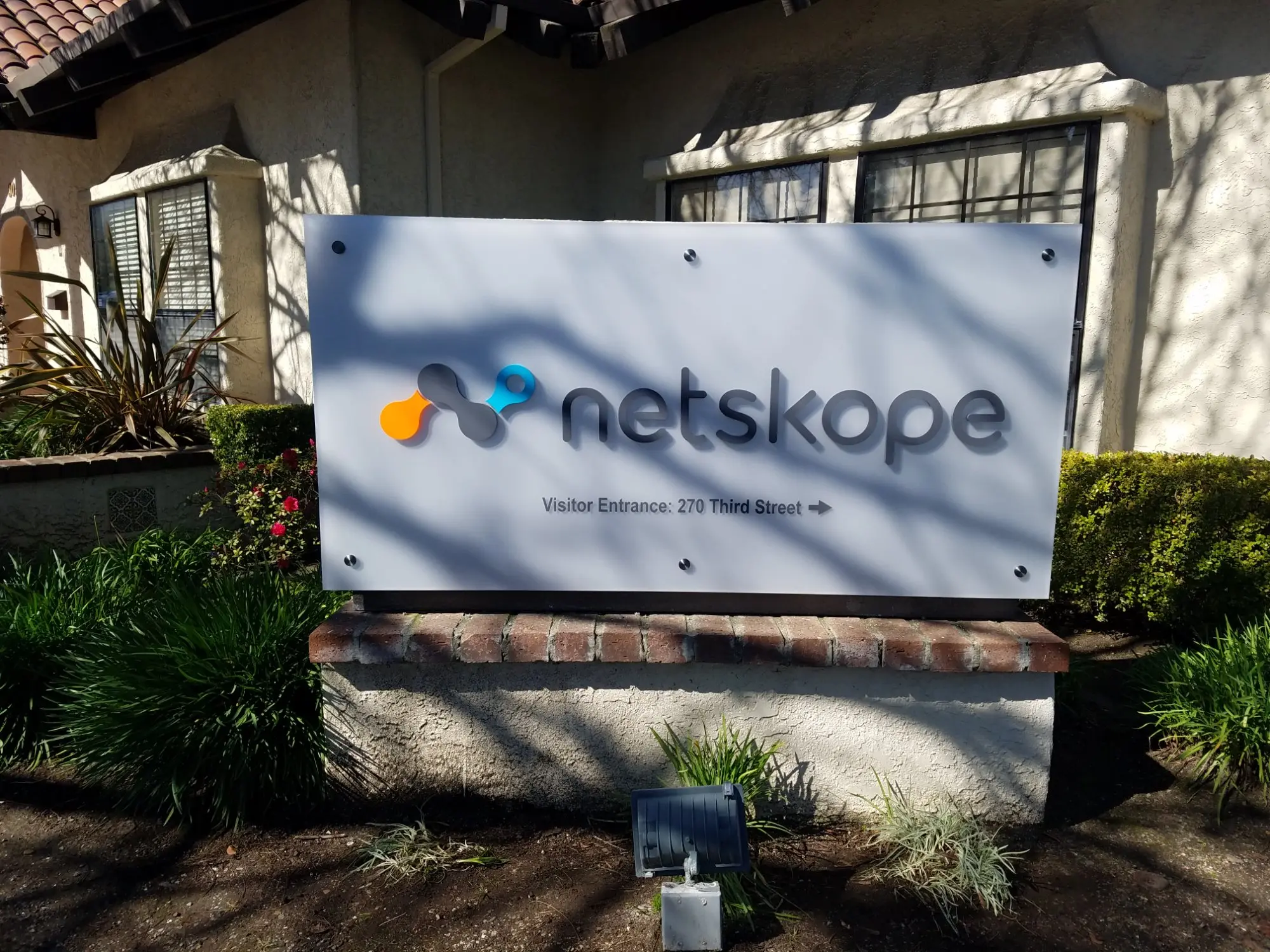
Two of the most common questions we get from property managers and business owners in San Jose: “What’s the difference between a monument sign and a pylon sign?” and “Which one do I actually need?”
They’re both freestanding outdoor signs. Beyond that, they’re built for very different situations.
What Is a Monument Sign?
A monument sign sits low to the ground — typically between 4 and 8 feet tall — on a solid base. That base is usually masonry (brick, stone, or stucco), fabricated aluminum, or HDU (high-density urethane) designed to look like stone or wood.
The sign cabinet or face mounts directly on top of the base, or is recessed into it. The result is a substantial, permanent-looking structure that feels like part of the property rather than something bolted to a pole.
Monument signs are the standard choice for:
- Corporate office parks and campuses
- Medical and dental office buildings
- Apartment and condo complexes
- Hotels and hospitality properties
- Retail centers with lower-speed access roads
- Churches and schools
The low profile reads well at 5–35 mph — the typical speed when someone is approaching a driveway or turning off a surface street. They’re not designed for highway visibility.
What Is a Pylon Sign?
A pylon sign is tall. Most range from 15 to 40+ feet, mounted on one or two steel poles buried in a concrete footing. The sign cabinet — typically illuminated aluminum — sits at the top.
The height is the point. Pylon signs are built to be seen from a distance and at highway speeds, cutting through visual clutter and competing with neighboring signage.
Pylon signs are the standard choice for:
- Gas stations and convenience stores
- Fast food and casual dining chains
- Big-box retail anchors
- Strip malls and shopping centers along high-speed corridors
- Hotels near freeway off-ramps
- Car dealerships
In San Jose, you’ll see pylon signs along corridors like Stevens Creek Boulevard, Capitol Expressway, and Blossom Hill Road — anywhere traffic is moving fast and the sign needs to grab attention well before the turn.
The Key Differences
| Monument Sign | Pylon Sign | |
|---|---|---|
| Height | 4–8 ft typical | 15–40+ ft |
| Best visibility | 5–35 mph | 35–65+ mph |
| Base | Masonry or fabricated | Steel pole(s) |
| Perception | Upscale, permanent | High-visibility, commercial |
| Illumination | LED face-lit or halo-lit | Internally illuminated cabinet |
| Permit complexity | Moderate | Higher (structural engineering required) |
| Typical cost | $3,500–$15,000+ | $8,000–$40,000+ |
Permit Considerations in San Jose
Both sign types require a City of San Jose sign permit, and both are subject to the zoning district’s height and setback limits.
Monument signs are allowed in most commercial and mixed-use zones, but maximum height varies. Some districts cap them at 6 feet; others allow up to 8 or 10 feet. Setback from the property line and right-of-way is also regulated.
Pylon signs typically require a structural engineering stamp and a more detailed permit submittal — especially for anything over 20 feet. Many San Jose zoning districts restrict or prohibit new pylon signs outright in favor of lower-profile monument signs. If your property is in a corridor overlay zone or near a residential boundary, a pylon may not be permitted at all.
If you’re not sure what’s allowed on your property, that’s part of what we handle. We pull the zoning records, check current sign allowances, and let you know what’s feasible before you’ve committed to anything.
Multi-Tenant Directories
Both monument and pylon signs can include changeable tenant panels — individually lit or non-lit name strips that list multiple businesses on the same property.
For a professional office building with 6–12 tenants, a monument sign with an aluminum directory panel is the standard approach. For a shopping center with a grocery anchor and 20+ inline tenants, a tall pylon with an LED cabinet and changeable panels is more typical.
Which One Is Right for Your Property?
It depends on your location, your zoning, and how fast traffic is moving past your driveway.
If you’re on a surface street with a 25–35 mph limit and your customers are looking for you (medical office, corporate campus, professional services), a monument sign is almost always the better fit. It looks more substantial, fits the context, and is usually easier to permit.
If you’re on a high-speed corridor and need to compete for attention with neighboring retail or a gas station across the street, a pylon sign may be the only way to get seen in time.
When in doubt, we can pull up your address, check the zoning, and tell you exactly what’s allowed — and what we’d recommend.
Get a Quote for Your San Jose Project
Clear Line Signs designs, permits, fabricates, and installs monument and pylon signs for properties across San Jose, Milpitas, Santa Clara, Sunnyvale, and the broader Bay Area.
Request a free quote — most responses come back within one business day.
Serving San Jose · Santa Clara · Sunnyvale · Milpitas · Mountain View · Fremont and all of Silicon Valley.