
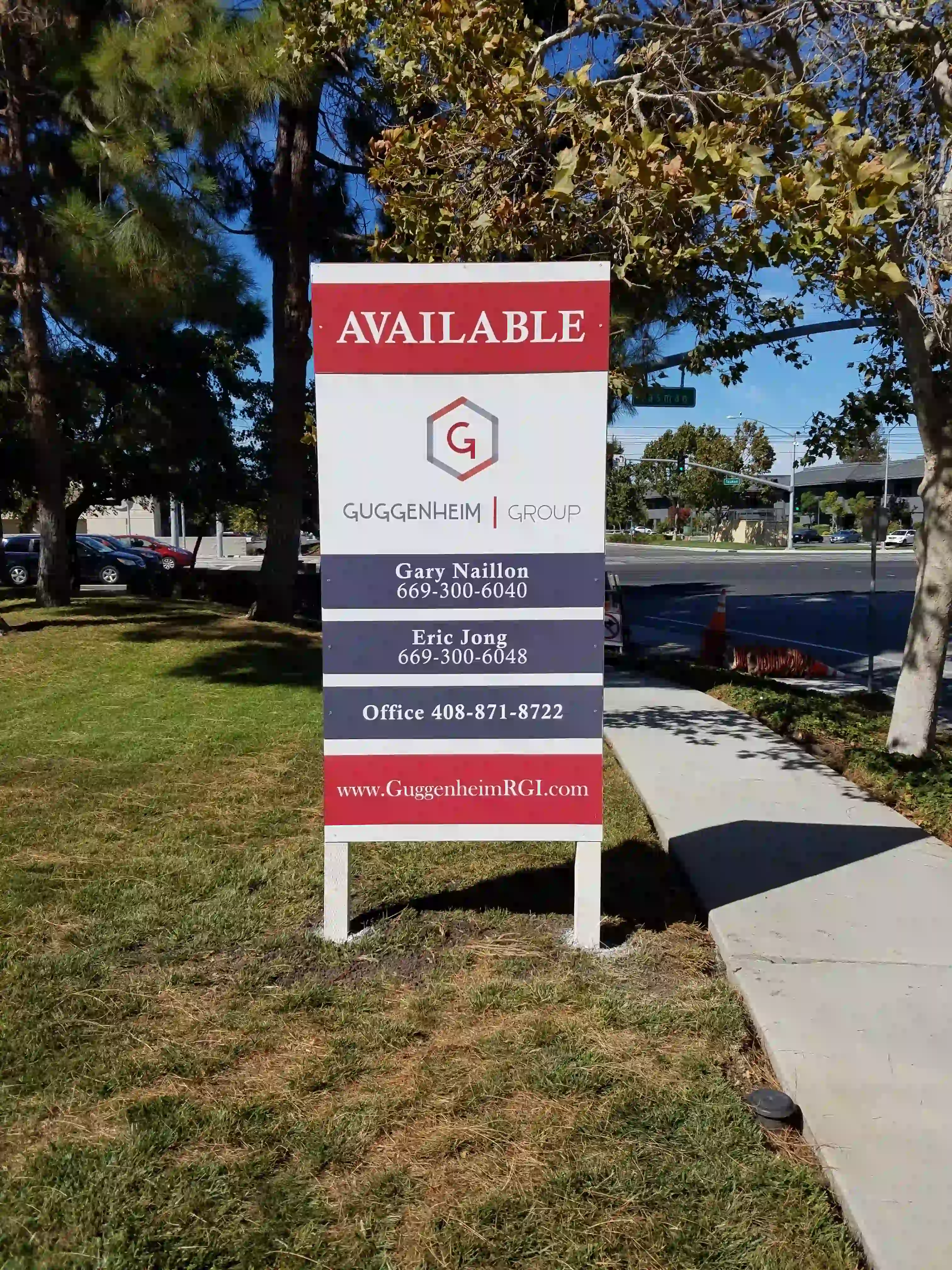
Post and panel signs are the workhorses of San Jose’s construction and commercial real estate sectors. They go up fast, hold up in outdoor conditions, and communicate clearly at distance — whether that’s a fire department response area marker on Calaveras Road, a development billboard near SAP Center, or a commercial available sign in front of a Silicon Valley office park.
They’re not glamorous. But for developers, contractors, property managers, and public agencies that need durable outdoor signage on a defined timeline, they’re often exactly the right tool.
What Is a Post & Panel Sign?
A post and panel sign is exactly what it sounds like: one or more rigid sign panels mounted between two vertical posts. The posts are typically steel, aluminum, or wood, either driven into the ground or set in concrete footings. The panel is the sign face — typically aluminum composite material (ACM/Dibond), corrugated plastic (Coroplast), or rigid PVC, with graphics applied by print or vinyl.
The format scales across a wide range. A small real estate available sign might be 24" × 36" on two wooden stakes. A large construction site billboard for a major development can be 8 × 16 feet or larger, on heavy steel posts set in engineered footings, engineered to handle wind loads that come with open-site exposure.
What unifies the format across those extremes: fast field installation, easy graphic replacement when information changes, and no foundation or structural permit required for most sizes (unlike monument signs).
Sign Types in This Category
Post & Panel Property Signs
The standard for commercial real estate, property identification, and directional signage. A panel — usually Dibond or PVC — mounted between two posts at a height visible from the street. Used for leasing and available signs, property identification for multi-tenant buildings, and directional markers for office parks and industrial properties.
Common sizes: 24" × 36", 36" × 48", 48" × 72". Larger panels require heavier posts and deeper footings.
Reflective Post & Panel Signs
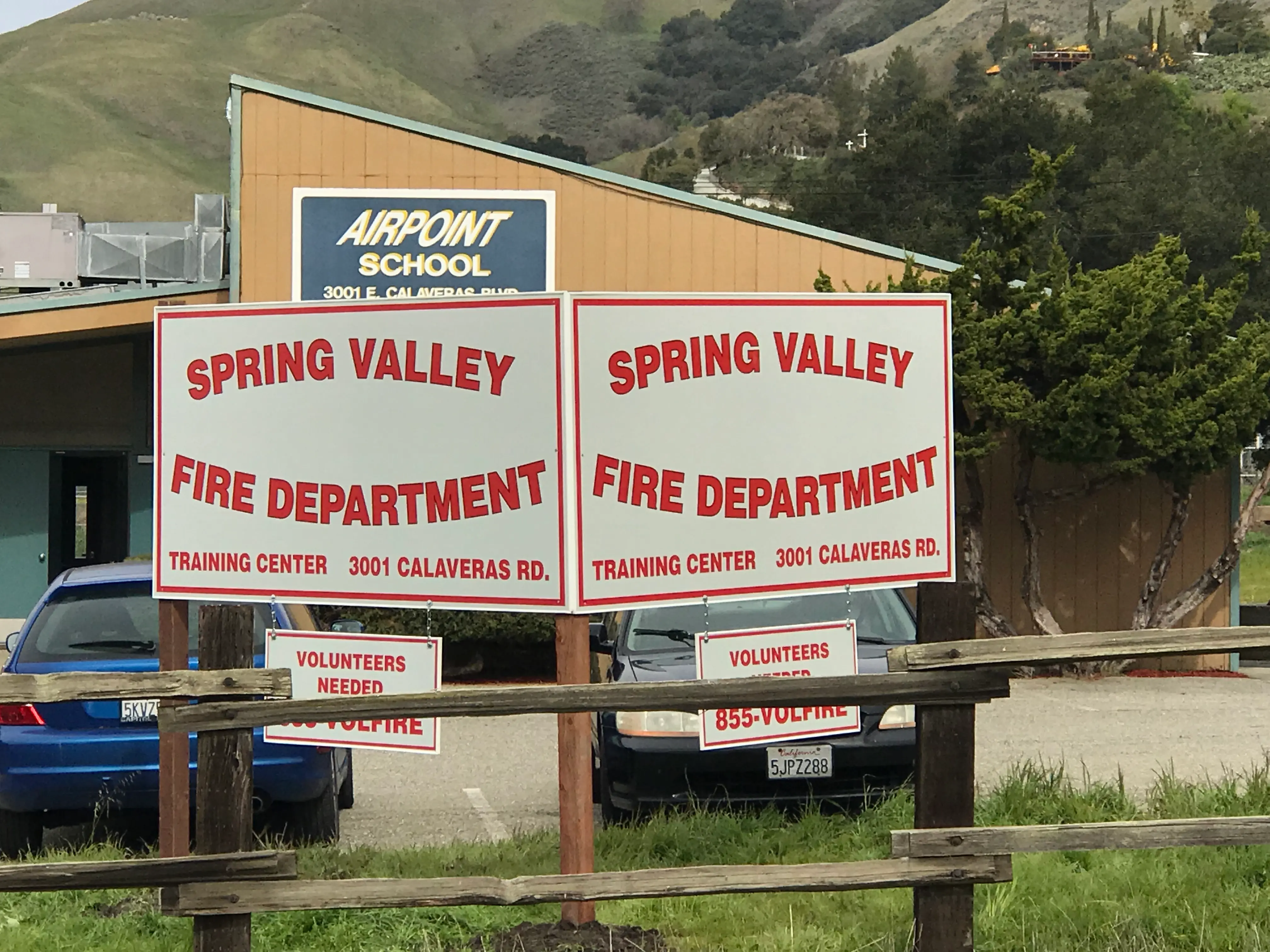
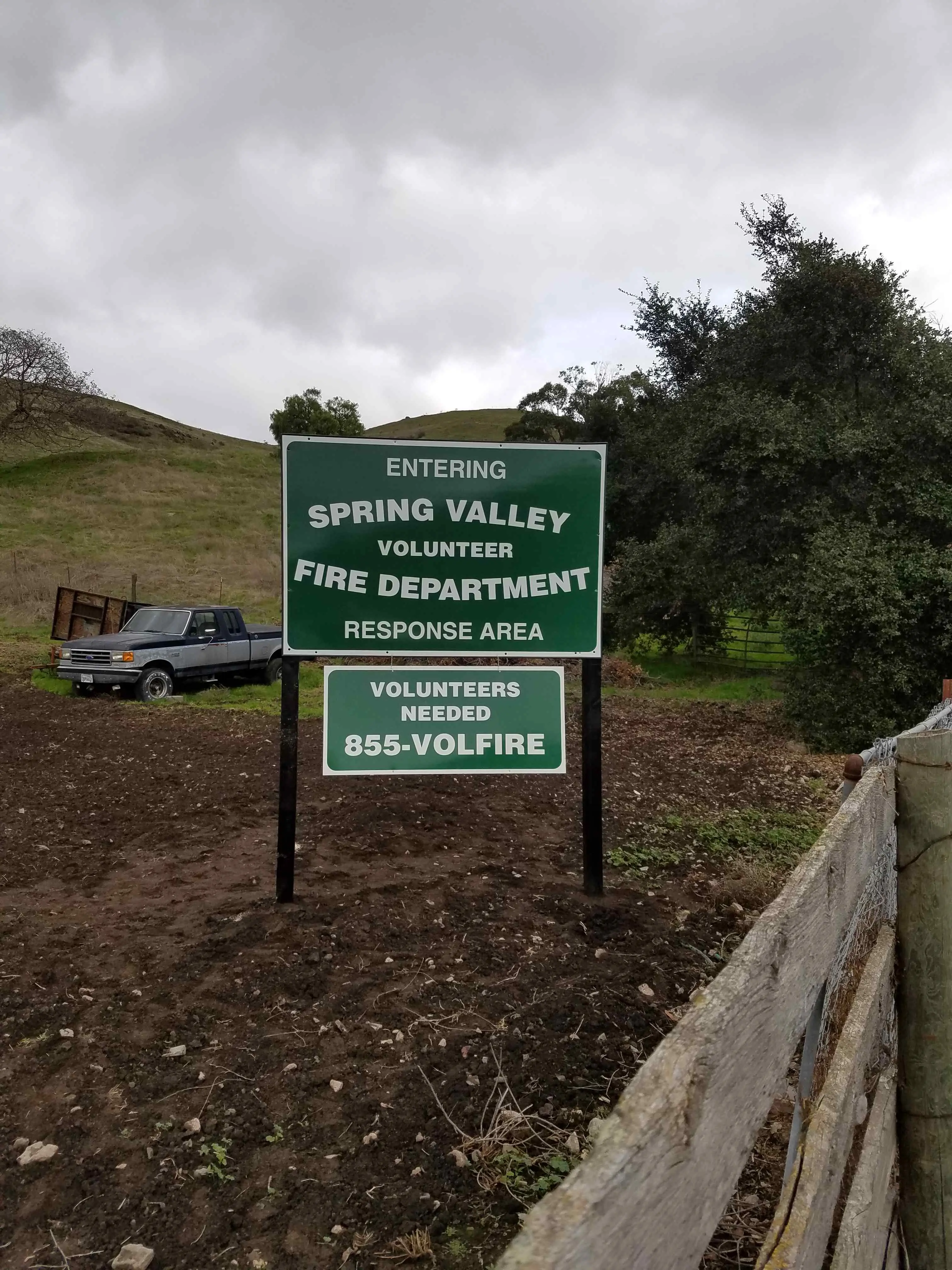
Used where nighttime or low-visibility readability is required — fire department response area signs, public safety markers, utility identification, and government agency signage. The panel substrate and vinyl are both reflective-grade, meeting retroreflectivity standards for nighttime visibility.
The Spring Valley Volunteer Fire Department signs we produced — both the double-sided training center markers and the green response area entry sign — are this type. Reflective-grade materials look similar to standard panels in daylight but read clearly at night under headlights.
Construction Site Billboards
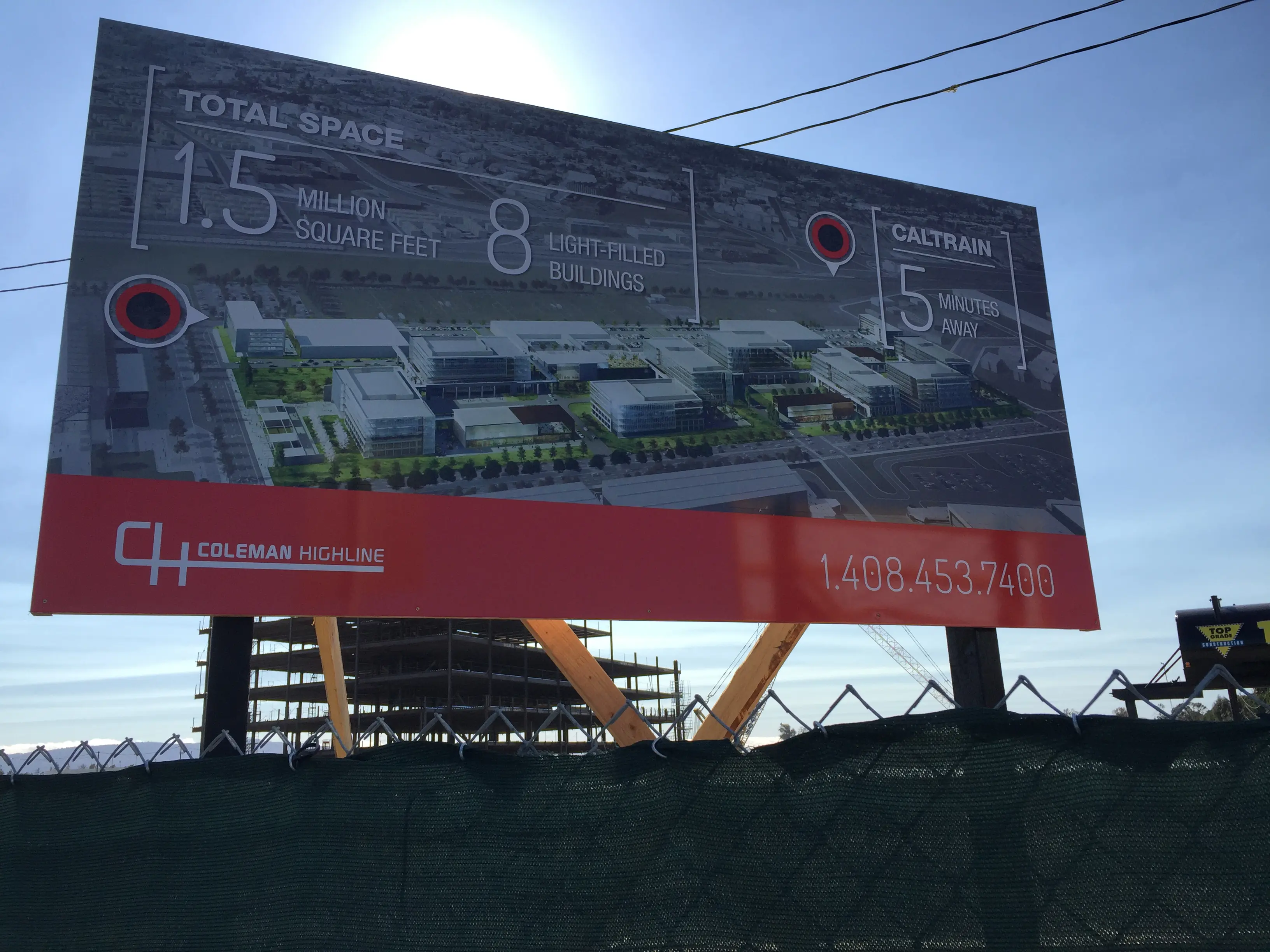
Large-format signs for active construction sites — identifying the development, communicating the project scope and timeline, and displaying the developer, broker, and leasing contact information. These are typically 4 × 8 feet up to 8 × 16 feet, on heavy steel posts, with full-color digitally printed panels.
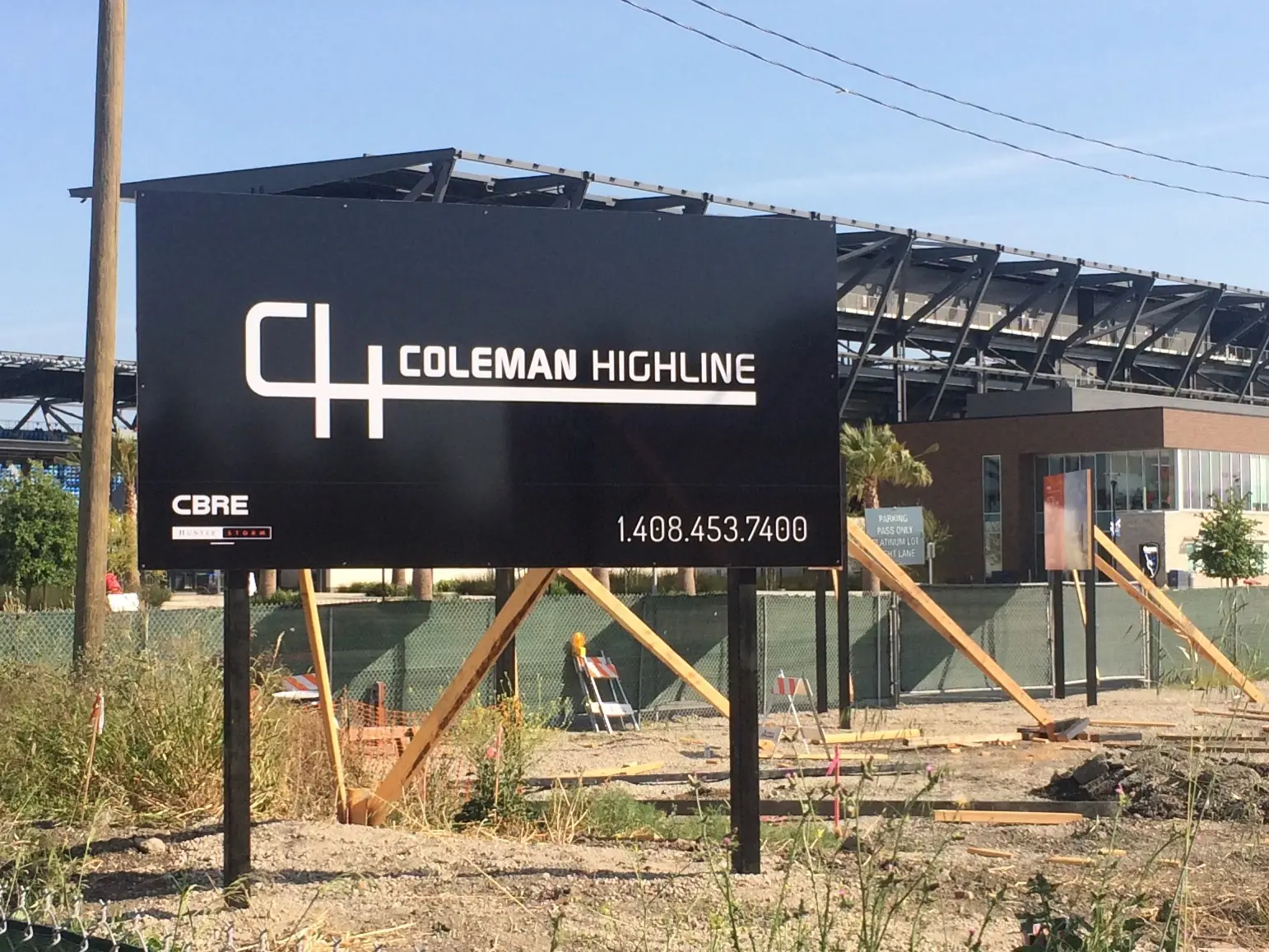
For major developments, construction billboard programs often include multiple signs facing different directions and traffic approaches. The Coleman Highline project near SAP Center in San Jose used three separate billboard configurations — a rendering-forward informational sign, a brand identity sign, and a street-facing site sign — all part of the same pre-leasing signage program.
Fence Wraps & Construction Barricade Graphics
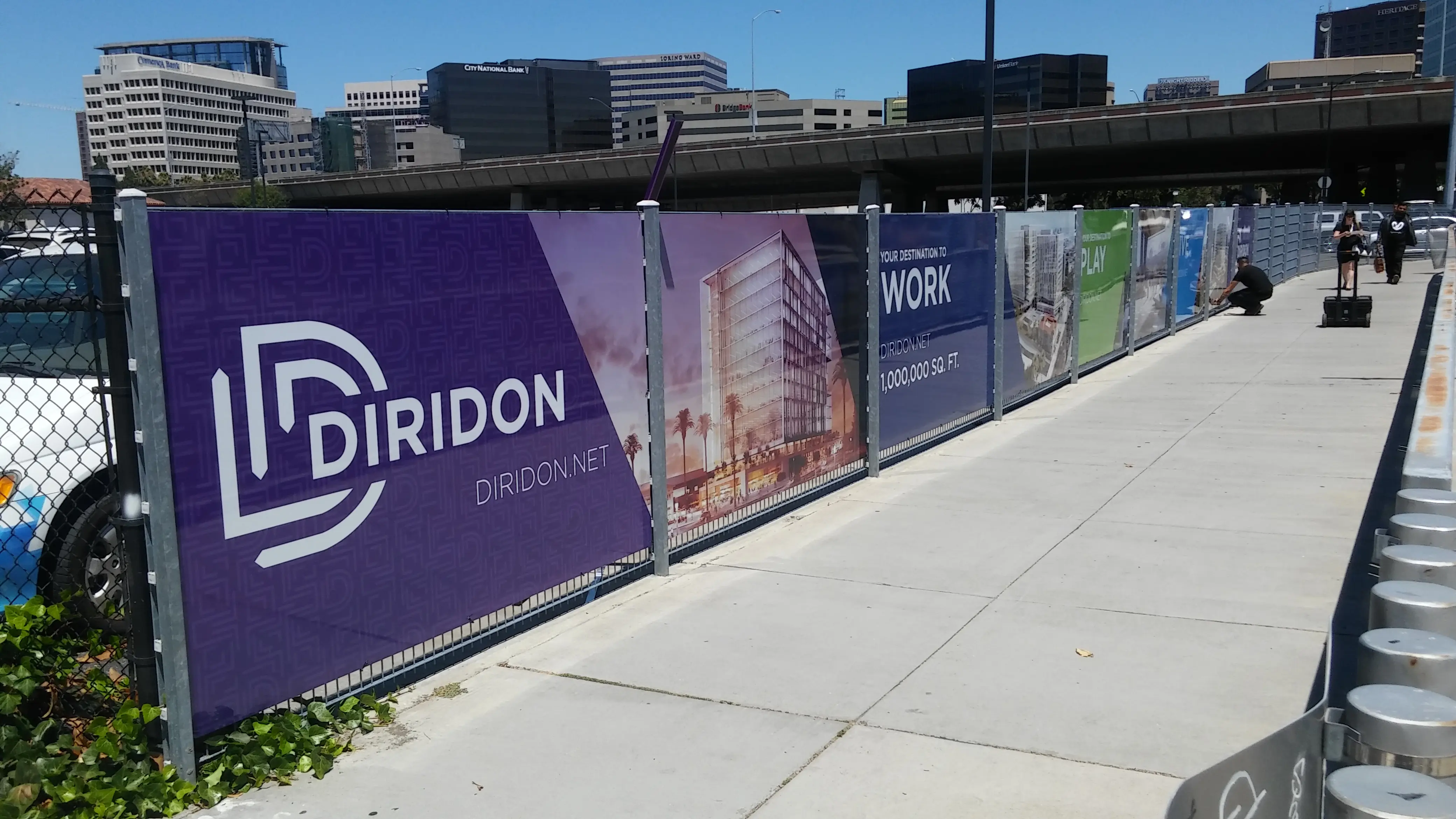
For urban development sites where the perimeter is a chain-link fence, construction barricade, or hoarding system, large-format printed panels or banner material attached to the fence turns a visual liability into a branding asset.
The Diridon development in Downtown San Jose — a 1,000,000 square foot mixed-use project near Diridon Station — used an extensive fence wrap program running the full site perimeter. High-resolution printed panels on the existing chain-link fence communicated the project’s Work · Live · Play positioning to pedestrians and transit riders passing the site daily.
Display Structures & Wrapped Cubes
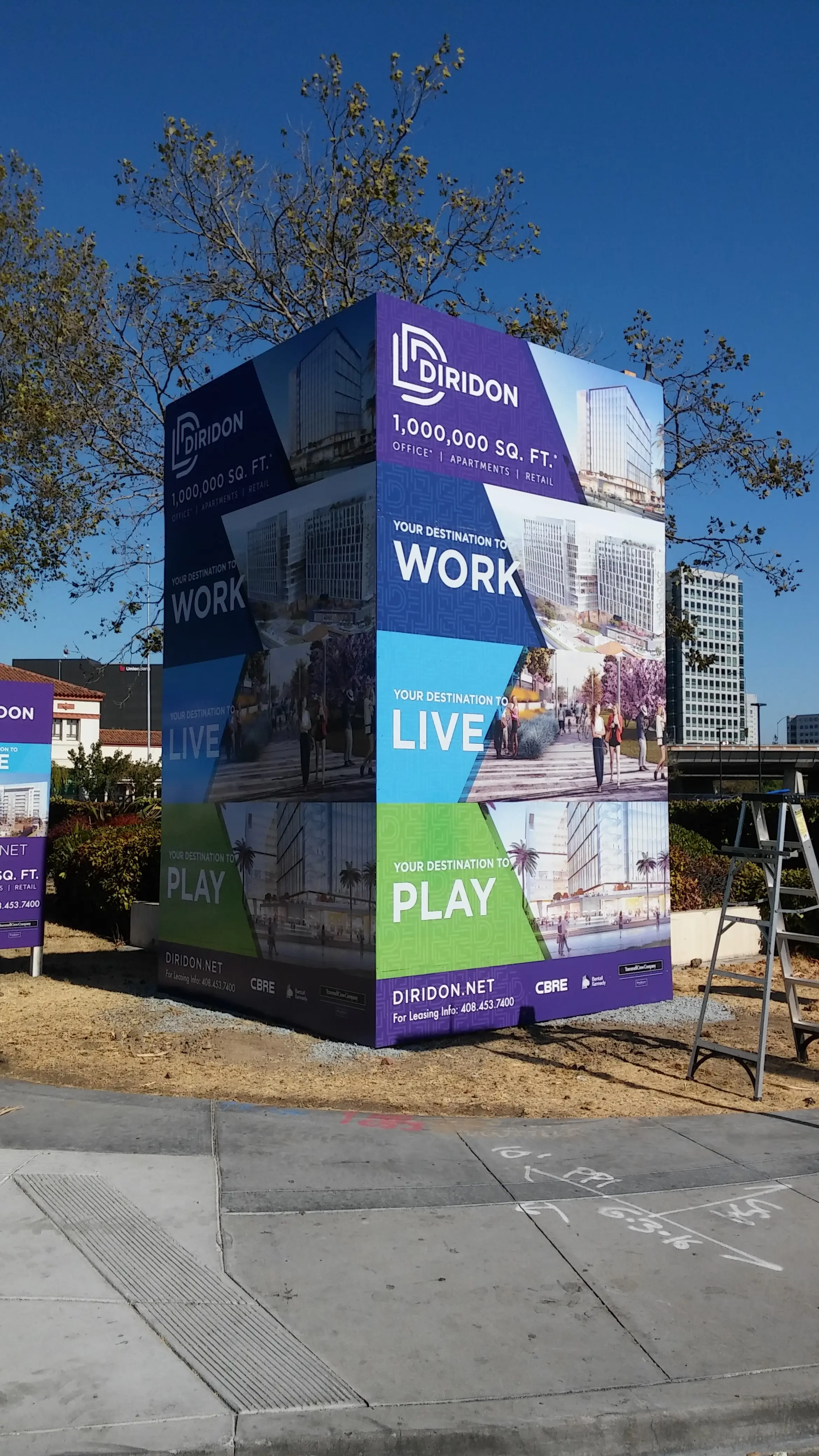
For prominent corner locations or high-foot-traffic development sites, three-dimensional display structures wrapped in large-format graphics create an immersive brand experience. The Diridon project also used a full-wrap display cube positioned at a key site entrance — four sides of branded development graphics visible from multiple approach angles simultaneously.
Materials: What Post & Panel Signs Are Actually Made From
Aluminum Composite Material (ACM / Dibond) The standard for permanent and semi-permanent outdoor post & panel signs. Two thin aluminum skins bonded to a polyethylene core — rigid, lightweight, weather-resistant, and dimensionally stable. Takes direct print or vinyl graphics cleanly. Holds up for years in outdoor exposure without warping or fading. Used for real estate signs, property ID signs, and any installation expected to last more than a season.
Corrugated Plastic (Coroplast) Lightweight and inexpensive. Used for short-term yard signs, temporary directional signs, and anything that needs to be installed and removed quickly. Not suitable for large format or high-wind exposure.
PVC (Sintra / Foam Board) Slightly more rigid and premium than Coroplast, often used for medium-duration installations where Dibond would be over-specified. Good for indoor or protected outdoor applications.
Reflective Sheeting Applied over aluminum substrates for safety, government, and infrastructure signs that need to meet MUTCD or FHWA retroreflectivity standards. Available in multiple grades from standard engineer-grade to high-intensity prismatic.
Print on Vinyl, Applied to Panel Most full-color construction and development signs use high-resolution solvent or UV-flatbed print on vinyl applied to the panel substrate. The vinyl acts as both the graphic layer and a protective surface coating.
Bay Area Considerations
Wind load matters more than most clients expect. An 8 × 16-foot construction billboard is essentially a sail. Open construction sites often channel wind, and a sign that fails in a windstorm is a liability and a replacement cost. Post embedment depth, post gauge, and footing size all need to be matched to panel size and local wind exposure.
Most post & panel signs don’t require a city sign permit if they’re on private property, temporary in nature, and within San Jose’s allowable temporary sign parameters. However, signs that are permanent, over a certain size, or visible from a public right-of-way may trigger permit requirements. Development site signs associated with an active building permit are often reviewed as part of the construction document package.
Real estate and leasing signs in commercial zones have specific size limits and duration restrictions in San Jose’s sign ordinance. A sign company that pulls the code for your specific address before fabrication prevents wasted production costs.
Reflective-grade signs for public safety, fire department, and utility applications may need to meet specific retroreflectivity standards. Not all sign shops stock or are familiar with certified reflective materials — it’s worth confirming before ordering.
What to Provide for a Quote
Getting an accurate quote for post & panel signs is straightforward:
- Panel size and quantity — how many signs, how large
- Installation surface — grass, asphalt, concrete (affects post and footing spec)
- Duration — temporary (weeks/months) or semi-permanent (years)
- Your artwork or logo — vector preferred
- Any reflectivity requirements — standard or reflective-grade
- Site address — so we can pull applicable sign code
Most post & panel sign quotes turn around in 1 business day. Production for standard Dibond panel signs is typically 5–10 business days. Large-format construction billboards with steel post fabrication and installation take 2–3 weeks from artwork approval.
FAQ
What’s the difference between a post & panel sign and a monument sign? Post & panel signs use exposed posts (wood, aluminum, or steel) with a panel face. Monument signs are fully enclosed structures — masonry, stucco, ACM, or wood — that conceal the structural support and sit flush with a ground-level base. Monument signs look more architectural and permanent; post & panel signs install faster and cost less.
Can I reuse the posts and change just the panel graphics? Yes — for most steel and aluminum post installations, panels are removable and replaceable. This is a common approach for real estate signs (same posts, new panel when a new listing goes up) and construction billboards (updated rendering or leasing information without replacing the post structure).
How large can a post & panel sign get? Practically, most Bay Area contractors are comfortable up to 4 × 8 feet on standard round steel posts. For larger installations — the 8 × 16-foot construction billboard range — a structural post fabricator is involved and footing depth is calculated based on panel size and local wind speed data.
Do post & panel signs hold up in rain and wind? Dibond panels and powder-coated steel posts are designed for permanent outdoor exposure. Standard vinyl graphics on Dibond are typically rated for 7-year outdoor durability. Reflective sheeting is rated similarly. Corrugated plastic signs are not — they’re a short-term product.
Can you match specific colors for a development branding program? Yes. Development branding programs like Coleman Highline and Diridon have specific brand color systems. We print to those specs and can Pantone-match painted post finishes for programs that require it.
Get a Quote for Your San Jose Project
Clear Line Signs produces post & panel signs, construction site billboards, fence wrap graphics, and real estate signs for projects across San Jose, Milpitas, Santa Clara, Sunnyvale, and the broader Bay Area.
Request a free quote — most responses come back within one business day.
Serving San Jose · Santa Clara · Sunnyvale · Milpitas · Mountain View · Fremont and all of Silicon Valley.