
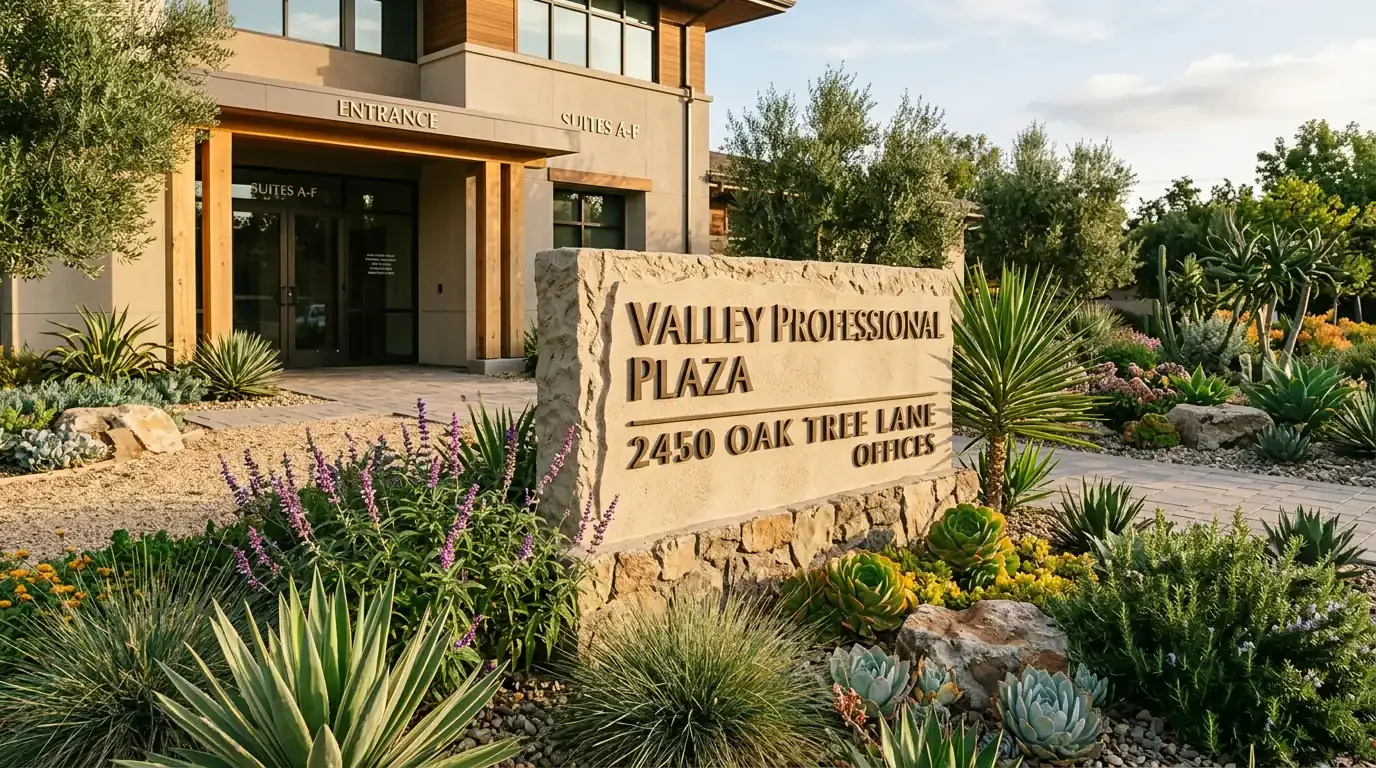
Sandblasted signs have a distinctly different presence from flat-cut letters or printed panels. The recessed, three-dimensional texture reads as permanent — something that belongs to the building rather than something applied to it. That’s why they’re a consistent choice for professional offices, wineries, medical campuses, churches, and properties where the architectural character matters.
Here’s a practical breakdown of the material options, use cases, and costs.
What Sandblasting Actually Does
Sandblasting uses high-pressure abrasive media to erode material — typically HDU foam, wood, or natural stone — around masked areas, leaving the design elements raised. The result is a sign with dimensional depth: raised letters and logos stand proud of a recessed background, or a recessed image sits within a raised border.
The visual effect is similar to carved stone or carved wood, depending on the material and finish. When painted, it’s nearly indistinguishable. Unpainted, the natural grain or texture shows through the carving.
Material Options
HDU (High Density Urethane) is the most common substrate for sandblasted commercial signs in the Bay Area. It’s a closed-cell foam board that machines and sandblasts cleanly, holds paint well, and is fully weatherproof. HDU doesn’t rot, warp, or crack the way wood does, which makes it the practical choice for exterior monument signs, post-and-panel signs, and building identification signs that need to last 15–20 years without maintenance.
Redwood and cedar are the traditional choices for sandblasted signs and still appropriate for certain applications — winery estate signs, residential entry markers, craftsman-style storefronts. The grain pattern becomes part of the design when sandblasted and stained rather than painted. The tradeoff is maintenance: wood needs periodic sealing and touch-up, especially in coastal microclimates west of the 280.
Natural stone (granite, marble, slate) is used for permanent identification: building cornerstones, memorial plaques, campus entry markers. Sandblasted stone is extremely durable and requires virtually no maintenance. The cost is higher and installation requires masonry expertise, but the result is genuinely permanent.
Where They Work Best
Sandblasted signs are strongest in applications where:
- The building has traditional or craftsman architectural character
- The sign needs to feel permanent rather than promotional
- The location requires a monument or post-and-panel format
- The client wants a natural materials aesthetic
They’re less suited for applications requiring frequent copy changes, large square footage at lower cost, or illuminated faces — though backlit sandblasted signs are achievable with routed panels over a lit cabinet.
In the Bay Area specifically, HDU sandblasted monument signs are common in Los Gatos, Saratoga, Los Altos Hills, and the foothill communities where city sign codes favor natural material aesthetics and restrict large backlit cabinets.
Permit Considerations
Sandblasted monument and post-and-panel signs are permanent structures and require a City of San Jose sign permit — or the equivalent in whichever jurisdiction the sign is located. The permit process covers height, setback, square footage, and illumination. In cities with design review requirements (Los Gatos, Saratoga, Palo Alto), the material and finish may also be subject to approval.
We handle permit submittals as part of the project and coordinate with your landlord or property manager on any approval required under your lease.
Cost Range
HDU sandblasted sign, single-sided, monument or post-panel format, painted:
- Small (up to 6 sq ft): $800–$1,500
- Medium (6–20 sq ft): $1,500–$3,500
- Large (20–40 sq ft): $3,500–$6,500+
Add 20–40% for redwood or cedar. Stone varies significantly by size and complexity.
These are fabrication costs. Installation, permit fees, and post/base work are quoted separately based on site conditions.
Painted vs. Natural Finish
Most commercial sandblasted signs are painted — typically two or three colors with hand-painted or sprayed fills in the recessed areas and a contrasting background. The painted finish allows for exact brand color matching and is more legible from a distance.
Natural-finish (stained, not painted) sandblasted wood signs are appropriate for certain residential-adjacent commercial applications: boutique wineries, garden centers, bed-and-breakfasts, and properties where the organic character is part of the brand. They require more maintenance but have a warmth that painted HDU doesn’t replicate.
Need a sandblasted sign for a Bay Area property? Get a free quote → or learn more about sandblasted signs in the Bay Area.