
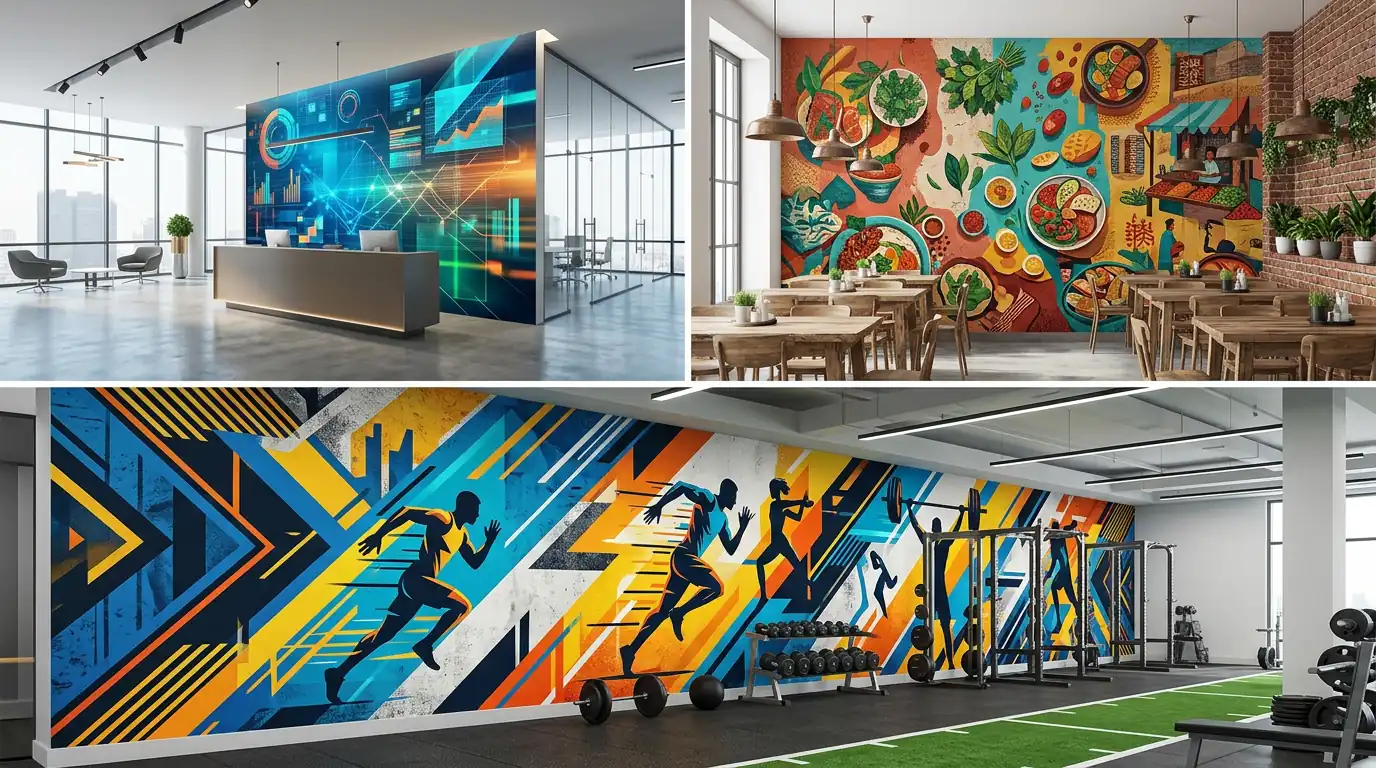
Wall wraps transform commercial spaces faster and more affordably than almost any other interior upgrade. No contractors, no paint, no construction — just a large-format printed graphic applied directly to the wall. The design possibilities are wide open, but what works in a tech office doesn’t necessarily work in a restaurant, and what looks right in a gym would feel out of place in a medical waiting room.
Here are practical wall wrap ideas broken down by business type, based on what actually gets installed and what clients say works.
Tech Offices and Startups
Silicon Valley offices use wall wraps more than any other commercial category. The combination of open floor plans, glass-walled conference rooms, and identity-driven culture makes branded wall graphics a natural fit.
What works:
Brand and logo walls. The lobby wall behind reception is almost always the first installation — company name, logo, and tagline scaled to fill the full wall. This is the sign that appears in every investor photo, every press piece, every LinkedIn post from the office. It needs to look right at scale.
Values and culture walls. Core values, mission statements, and company history displayed at mural scale in high-traffic areas like break rooms, main corridors, and open workspace zones. Popular with Series B and later-stage companies reinforcing culture through physical space.
City and abstract murals. San Jose and Silicon Valley skyline graphics, abstract geometric designs, and large-scale nature imagery in conference rooms and break rooms. Gives the space visual interest without heavy branding — useful in neutral-zone spaces where clients and external visitors spend time.
What to avoid: Text-heavy walls that are unreadable from across an open floor plan. Anything that dates quickly — specific product names, campaign slogans, or team photos without a plan for how to update them.
Restaurants and Cafés
Restaurant wall wraps are about atmosphere first, brand second. The best restaurant feature walls change how the space feels, not just how it looks.
What works:
Full-wall photography. A vineyard, a street market, a coastline, a forest — large-scale photographic scenes make a dining room feel larger and set a mood that matches the cuisine. Italian restaurants, sushi bars, and farm-to-table concepts all use this well.
Illustrated murals. Custom illustrated wall graphics — botanical, geometric, abstract — give a restaurant a distinctive look that photographs well for social media and creates a sense of place. Popular with brunch spots, cocktail bars, and fast-casual concepts along San Jose’s dining corridors.
Brand storytelling walls. The back of house entrance, the bar back, or a feature wall near the entrance can display the restaurant’s origin story, sourcing philosophy, or chef biography in a graphic format that adds depth to the brand.
What to avoid: Low-resolution images — a blurry mural printed large looks worse than nothing. Anything that competes visually with menu boards or service areas. Dark graphics in already-dim spaces.
Gyms and Fitness Studios
Fitness spaces have a different visual job than offices or restaurants. The walls need to energize, motivate, and reinforce the brand promise.
What works:
Athletic photography. High-contrast action photography — athletes, movement, performance — printed large on feature walls adjacent to training areas and equipment zones. Creates energy and sets an aspirational tone.
Motivational typography. Bold, large-scale typographic quotes and training mantras work well in weightlifting areas, sled tracks, and high-intensity zones. Keep the font large, the contrast high, and the message short.
Brand walls at entry. The entrance and reception area are where first impressions form. A strong brand wall here — logo, name, tagline — reinforces the gym’s identity from the moment a member or prospect walks in.
What to avoid: Overly decorative graphics that feel out of place in a high-intensity environment. Anything that requires frequent cleaning and doesn’t have a durable, matte finish. Gloss laminate in direct sunlight areas shows every handprint.
Retail Stores and Showrooms
Retail wall wraps need to do multiple things at once — reinforce brand, support the merchandise, and drive purchase intent.
What works:
Campaign and seasonal graphics. A full-wall campaign image — product photography, lifestyle scenes, seasonal themes — gives retail spaces the visual punch of a high-budget print campaign at a fraction of the cost. Removable vinyl options allow seasonal updates without wall damage.
Product context walls. Photography showing products in use — furniture in a room setting, apparel in an outdoor scene, food in a lifestyle context — converts browsers. Used heavily in showrooms, home goods stores, and specialty retail.
Feature destination walls. A distinctive wall in the back of the store draws customers deeper into the space and creates a social media moment. Branded, photographable, and strategically placed at the back to maximize browse time.
What to avoid: Graphics that compete with merchandise for visual attention. Permanent installs in leased spaces — use removable cast vinyl so you retain flexibility for layout changes and lease-end restoration.
What Every Wall Wrap Needs to Succeed
Regardless of business type, a few things determine whether a wall wrap looks professional or amateur:
Resolution. Wall wraps are printed large — a 100 dpi image that looks fine on screen will look blurry at 10 feet wide. We size and spec artwork for print before production, not after.
Color accuracy. The color on your screen is not the color on the wall. We calibrate to your brand’s color values and produce test prints before full production when color accuracy is critical.
Surface preparation. Fresh paint needs 30 days to cure before vinyl application. Textured walls require a different adhesive specification than smooth drywall. We assess the wall surface before committing to a product.
Professional installation. Seam alignment, bubble-free application, and clean edge trimming are what separate a professional installation from a DIY attempt. Wall wraps at mural scale are not a self-install product.
Ready to see what a wall wrap would look like in your San Jose space? Visit our wall wraps page or request a free quote →